
Atacama Stargazing: The Trip That Almost Failed — And What You Need to Know Before You Go
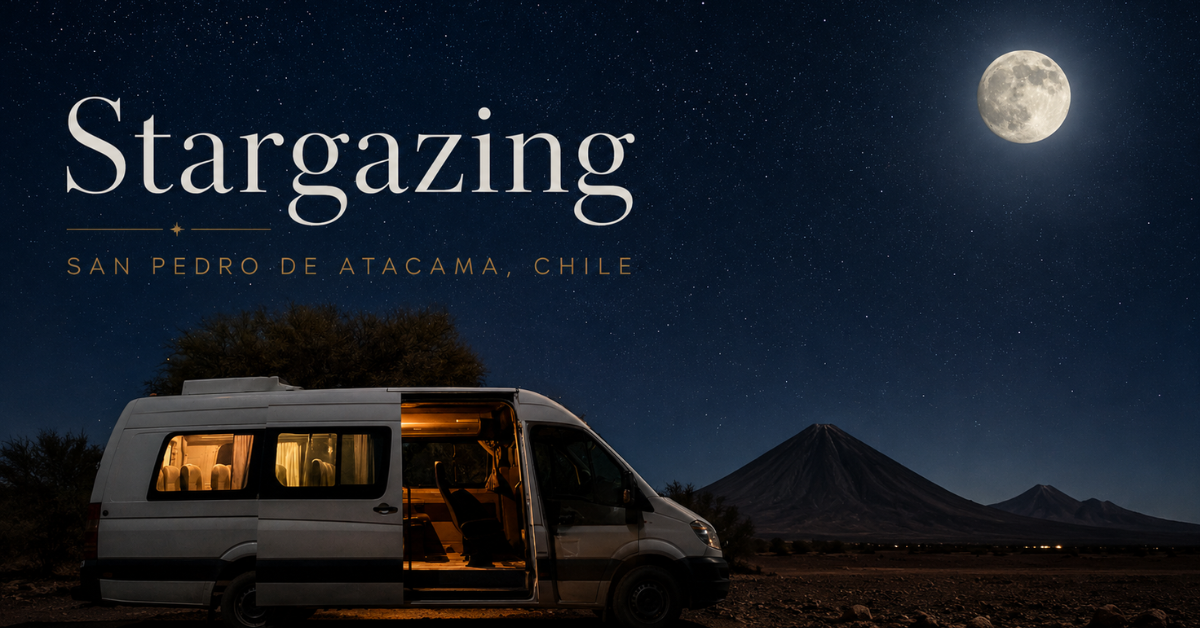
“Atacama” is a dream destination for stargazers worldwide. As the driest desert on Earth, it offers the clearest skies and is home to world-class observatories like ALMA. My journey began with a cozy morning in Santiago before flying to Calama, driven by a single life goal: “To see the Milky Way with my own eyes.” But as always, travel has its own way of teaching us lessons—specifically, a lesson about “timing.”
Before You Fly to Atacama: What Most Travelers Get Wrong on Travel Day
Getting to Atacama isn’t just about landing in Calama. After a 2-hour flight, you still face a 1.5-hour shuttle ride to the town of San Pedro.
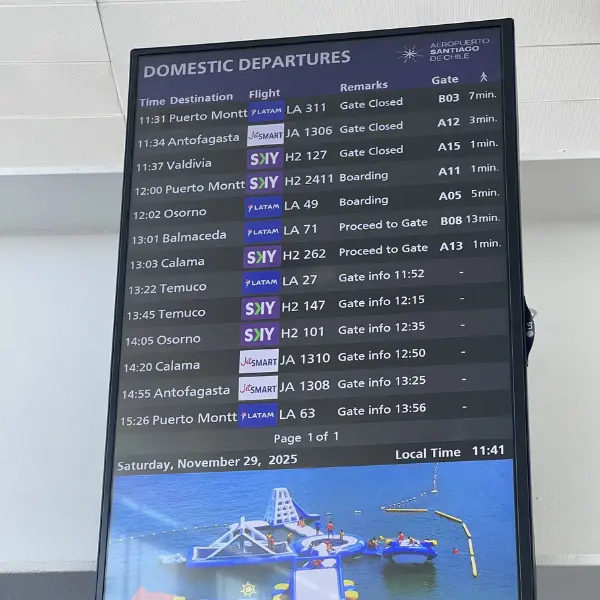
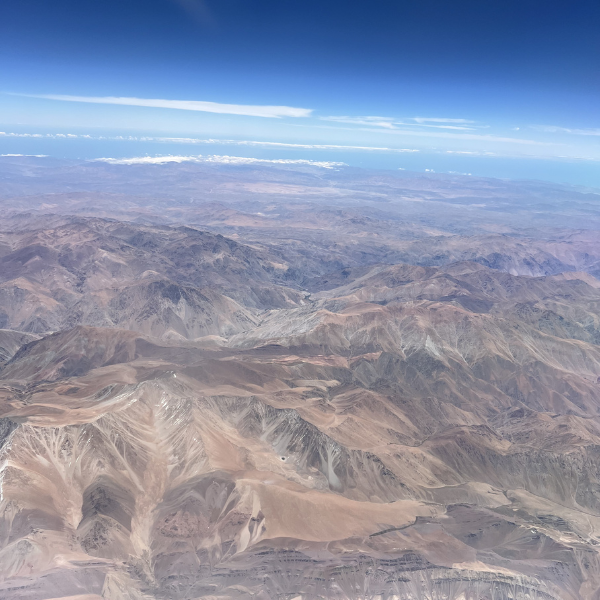
- Don’t start your day in a rush: If you have a mid-morning or afternoon flight, find a local cafe near your stay first. You don’t want to start your journey hungry or exhausted before the long shuttle ride.
- Recharge in Santiago: I found a hidden gem near my stay where a giant cup of hot chocolate and complimentary bread made a long morning feel much softer. [Check out the best areas to stay in Santiago here.]
- Pre-book your Calama to San Pedro shuttle: Once you land at Calama Airport, the transfer to San Pedro is your next step. Shuttles are limited and timed to flight schedules — booking ahead means you won’t be standing around in the desert wind wondering what to do next. [Book your airport transfer here.]
- Pack a heavy-duty moisturizer in your carry-on. The dryness hits the moment you step off the plane. We used ours from the flight all the way through the desert — it was a lifesaver. [The one we used is here.]
Welcome to San Pedro de Atacama: A Town Where It Hasn’t Rained in Centuries

Stepping off the shuttle in San Pedro de Atacama, the vibe shifts instantly. High winds, bone-dry air, and the silence of a stone town in the middle of the desert. The giant wind turbines standing against the brown landscape feel raw and incredibly cool.
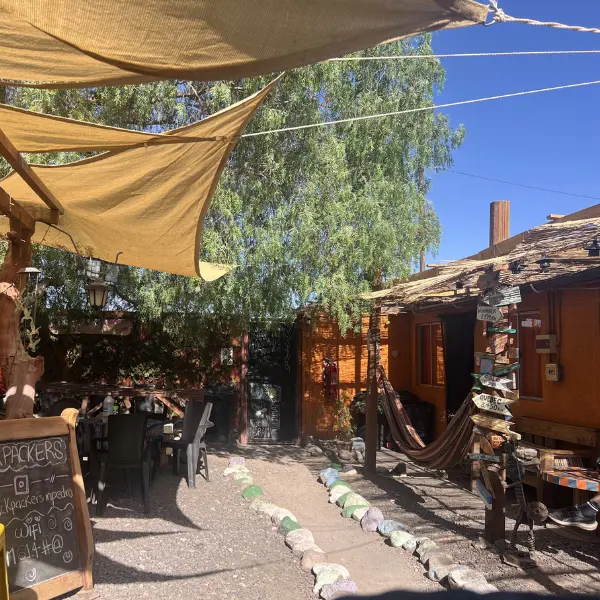
I stayed at Backpackers Hostel San Pedro, which offers private rooms, dorms, and a kitchen. It’s about a 15-minute walk to the main Plaza, but the payoff is peace, quiet, and far less dust. If you’re sensitive to dry air, and a front porch where you can actually sit and breathe. If you’re sensitive to dry air or just want to work in peace, staying slightly outside the main area is worth it. [Check current rates for comfortable stays in Atacama here.]
Local Flavor: The Meal That Made Me Feel at Home in the Middle of the Desert
Nobody told me that a border town in the Andes would make me tear up over a plate of food. Lomo Saltado — bold, savory Andean beef stir-fry served over hot rice — tasted like something from a Thai takeout spot, in the best possible way. Simple, familiar, and somehow the most memorable meal of the whole trip.


After lunch, I wandered through Feria Artesanal, a local craft market packed with alpaca and llama wool textiles. The softness is something else — not like anything you’d find at a gift shop. On the way out toward the Plaza, I caught a group of local children performing a traditional dance. All color and music against the pale, empty landscape just outside town. Atacama, it turns out, isn’t just dry land. It’s full of life.
Why You Couldn’t See the Milky Way in Atacama — The Moon Phase Mistake
The big night arrived. I was ready. Atacama is home to ALMA Observatory and some of the darkest skies on Earth — the kind of place where the Milky Way is supposed to stretch horizon to horizon. We drove out into the pitch black, and I was already picturing the photos.
Then the guide said it: “We just passed the full moon. The moonlight will wash everything out.”
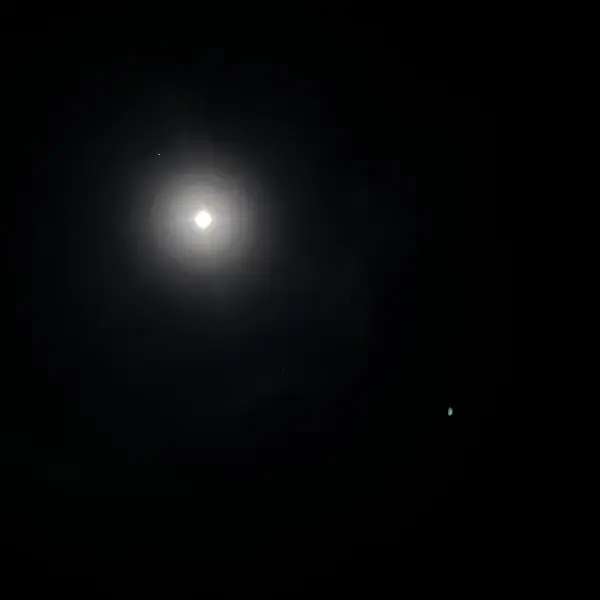
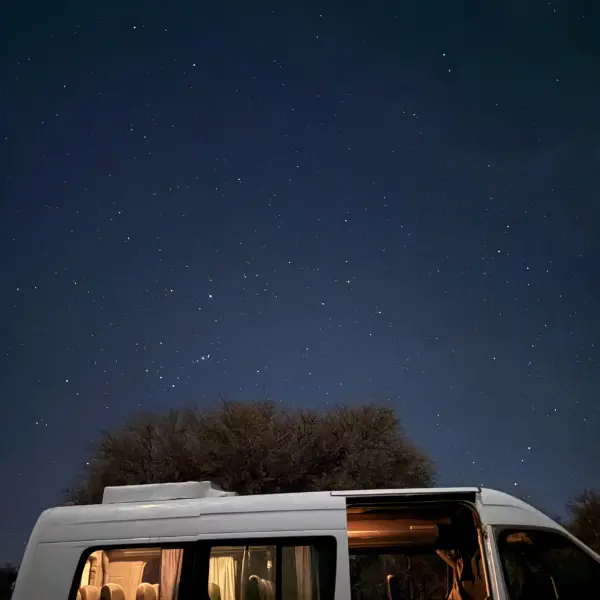
I looked up. Instead of a million stars, the sky was pale and bright. The tour was cancelled and refunded. I won’t pretend I wasn’t devastated — this was the whole reason I came. But it became the most important lesson of the trip:
Check the moon phase before you book your stargazing tour. The best nights for seeing the Milky Way in Atacama are around the new moon or last quarter — when the sky is completely dark. A full moon washes out the deep sky almost entirely. Most tour operators publish a moon calendar. Use it. Book around it. Don’t learn this the way I did.
When Plans Fall Apart — And Why the First Day Still Mattered
No matter how well you plan, travel has its own agenda. Missing the Milky Way stung. But the first day in San Pedro de Atacama wasn’t a loss. The Andean food, the craft market, the kids dancing in the Plaza, the new friends at Backpackers San Pedro — it all added up to something worth remembering.
This is only the beginning. More stops ahead, and I’m hoping the sky plays fair in the nights to come. If you’re planning your own Atacama itinerary and aren’t sure where to start, [download our full travel route here.]
Questions about traveling in Chile? Drop them in the comments on our [YouTube channel] — and tell me, did the stars come out for you?
🔗 Everything I’d Book Again for This Trip
Ready to chase the desert sky yourself? Here’s what we’d use again without hesitation:
Booking shortcuts:
- Watch the Journey: Highlight Moments | Full Atacama Vlog | Behind the Scenes (Uncut)
- Support My Journey: If this guide helped you, feel free to Buy Me a Chocolate 🍫 to keep the stories coming!
Note: Some links in this post are affiliate links. If you book through them, I earn a small commission at no additional cost to you. This directly supports Boo Ana’s content creation and future journeys. Thank you for your support!
FAQ
Q: When is the best time to go stargazing in Atacama?
A: April through October offers the clearest skies and best Milky Way visibility. Within any month, plan around the new moon or last quarter — full moon nights wash out the deep sky almost completely.
Q: Why couldn’t I see the Milky Way in Atacama?
A: The most common reason is moon phase. A full moon produces enough light to obscure the Milky Way even in Atacama’s famously dark skies. Always check a moon calendar before booking your stargazing tour.
Q: How do I get from Calama to San Pedro de Atacama?
A: By shuttle — roughly 1 to 1.5 hours depending on traffic. Pre-booking is strongly recommended as transfers are limited and timed to flight schedules.
Q: What should I pack for the Atacama Desert?
A: A heavy-duty moisturizer (the dryness starts on the plane), high-SPF sunscreen, a warm jacket for cold desert nights, and extra water. The altitude and dry air hit faster than most people expect.
Q: Is Atacama stargazing worth it even if you miss the Milky Way?
A: Yes — but manage expectations on full moon nights. Telescopic views of planets and star clusters are still excellent. If seeing the Milky Way is your primary goal, plan specifically around the new moon window.