
Santiago Walking Tour: Bullet Holes, 9.5 Quakes, and the Hidden Truths of the City

Coup d'état Bullet Holes and the World’s Strongest Earthquake
If you want to truly understand a city, there’s no better way than to “walk” it. That’s why we decided to join a Free Walking Tour in Santiago, the capital of Chile.
- A city that survived a massive 9.5-magnitude earthquake.
- A city where you can still see actual bullet holes from a military coup.
The most popular meeting point is at Plaza de Armas. Just look for the guides in “Green Hats.” If you didn’t book in advance, don’t worry—walk-ins are usually welcome!
Plaza de Armas: Where History Was Written in Blood
What is a Walking Tour? It’s a stroll with a local guide (usually a “Free Walking Tour” where you tip based on your satisfaction).
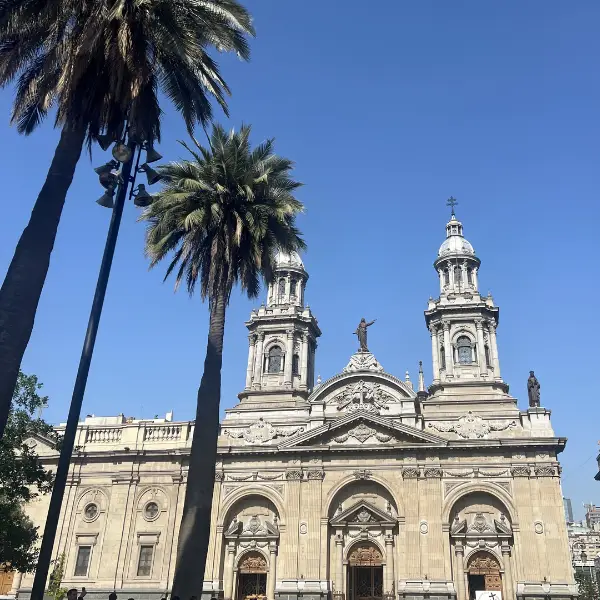
We started at the central square, Plaza de Armas. Our guide pointed out a unique monument called the Monument to the Indigenous Peoples. At first glance, it looks like just another piece of art, but the story behind it is staggering. It honors the Mapuche people who fought fiercely against Spanish colonization. It’s a stark reminder that before this city became beautiful, the original owners paid for this land with their lives.
“Walking tours make you realize that history never truly disappears; it’s just hiding around street corners.”

Shrapnel Scars at La Moneda: Living History
A short walk away, we reached La Moneda Palace. If the guide hadn’t pointed it out, I never would have noticed—even the trees out front still bear shrapnel scars from the 1973 coup. These are the physical traces of President Salvador Allende’s final stand in this very building.

🎥 Want to see the shrapnel marks and the tour atmosphere? Check it out here:
🌐 YouTube: [Watch the full video here]
(Thai available: click setting and change audio track)
Why a 9.5 Earthquake Couldn't Topple These Buildings!
As we entered the old financial district, the first thing I noticed was the chaotic web of overhead wires. Our guide explained that these old structures are incredibly flexible—designed specifically to withstand the strongest quakes on Earth. Since Chile experienced the most powerful earthquake in recorded history (9.5 magnitude!), these buildings were engineered to sway with the vibrations rather than collapse.

⚠️ The Danger Zone: "Put your phones and cameras away NOW!"
However, there’s something you need to fear more than earthquakes here: Safety.
As we left the financial district, our guide gave us a stern warning: “Put your cameras and phones away. Do not hold them out under any circumstances.” We were entering a “Danger Zone.” My senses immediately went into overdrive—I was suspicious of everyone walking nearby! It was a real lesson that when traveling here, you must stay alert and mindful at all times.
Purple Jacarandas and World-Class Ice Cream
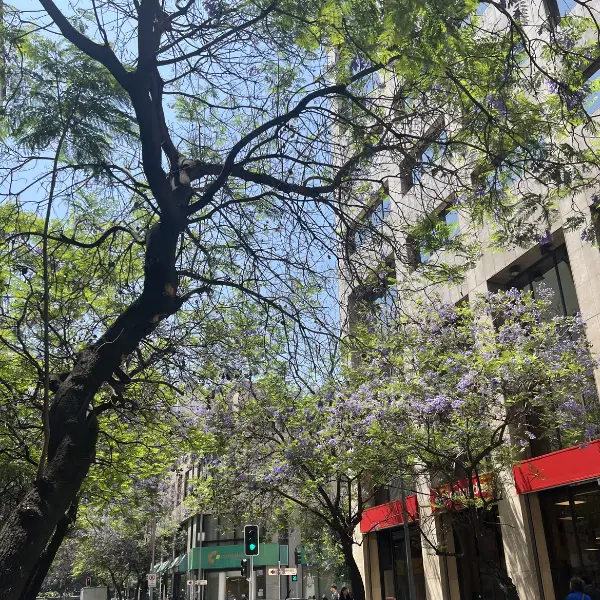

After the tension of the danger zone, we passed through Fuente de los Niños and the city’s theater.
We were greeted by the stunning bloom of purple Jacaranda trees (which only bloom for a few weeks during summer). We then stopped at the world-famous Emporio La Rosa, an ice cream shop ranked among the best in the world! Usually, the queue is massive, but we got lucky today. As the guide said: “If you don’t eat here, you haven’t truly arrived in Santiago.”
When Luck Isn't on Your Side: Walking to See a Closed Gate!

After the tour ended, I ventured out solo, crossing the chocolate-colored Mapocho River. My goal was the iconic landmark, Cerro San Cristóbal. After hiking for nearly 45 minutes, I arrived only to find… it was closed for renovations. All that walking just to take a photo of a closed gate! But hey, that’s the charm of traveling—anything can happen.

Is the Santiago Walking Tour Worth It?
Absolutely. It’s worth it because it doesn’t just show you places; it makes you understand the “soul” of the city, covering:
- Indigenous history
- The military coup
- The economy and earthquakes
- Daily local life
To be honest, walking back at night wasn’t as scary as I expected. You just need to be mindful and stay aware of your surroundings.

- Plan your Chile trip: Download the free itinerary. Click here
- Read more: [Eye-to-eye with a 4,000-year-old mummy at the Pre-Columbian Art Museum]